Security by altitude

Nobody has ever broken into a cloud. Not once, in the history of weather. This page explains why that record will hold.

Physical access: none

Your belongings sit between 1,200 and 39,000 feet in the air, inside a moving cloud with no address. A burglar would need a plane, the day's wind data, and our placement logs, and would still miss. Ground storage cannot say this.

Zero-trust, literally

We cannot open your crate once it is aloft. Neither can you. Neither can anyone. Industry frameworks call this zero-trust architecture. We arrived at it by balloon, but we arrived first.

Encryption at rest

Crates are sealed, strapped, and unlabeled except for a serial number. Even if a crate were recovered by a third party, its contents would be unreadable without the intake manifest, which lives on the ground, in a binder, in Doreen's office.

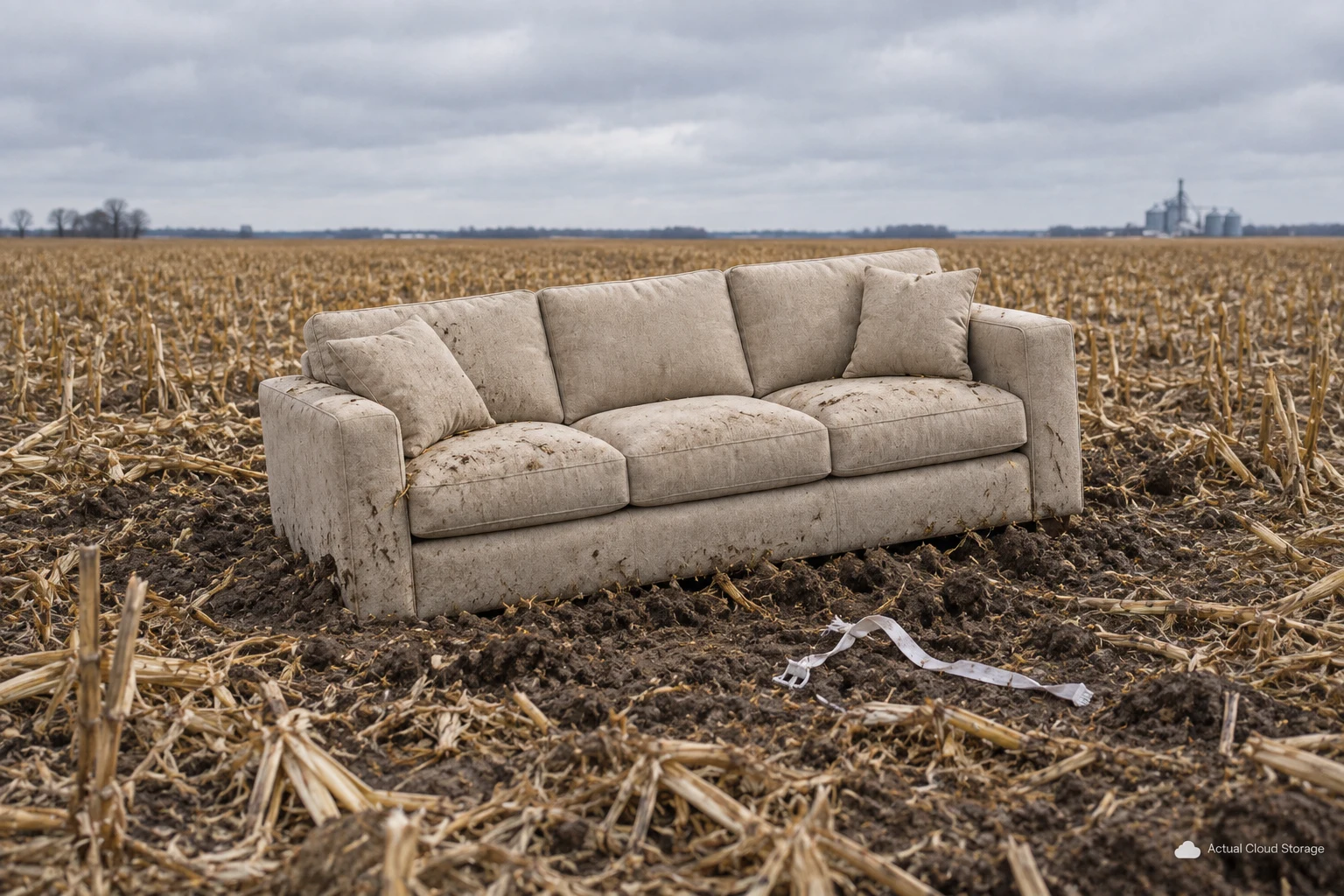
A beige sofa sitting askew in a Nebraska cornfield after falling from a stratus cloud, with a broken strap on the ground

We publish our failures

Most storage companies bury their incidents. We photograph ours, because they land in fields and the local paper usually gets there first anyway. The March 2024 sofa descent, pictured, remains our most cited incident and the reason every crate now ships with two straps.

The customer kept the photo. The sofa went back up. The technician who tied the original strap now runs our training program, which we consider the correct amount of consequence.

Data loss disclosures

A complete, chronological record of every incident involving customer belongings. "Data" here means your stuff. Loss means loss.

Known risks, stated plainly

Wind. Clouds move. Your region code describes where your cloud started, not where it is. We track drift continuously and update your coordinates in the app, usually before the cloud crosses a state line.

Evaporation. Clouds end. This is covered by Section 9 of your agreement, titled Impermanence, which our general counsel wrote during a difficult summer. The Fallback Net Program catches affected crates and re-uploads them to a neighboring cloud, typically within 48 hours.

Precipitation. Rain is retrieval. Sometimes retrieval happens whether you requested it or not. We call these unscheduled retrievals, we track them on the status page, and we drive your crate to your door with an apology and a towel.

Lightning. Cumulonimbus Enterprise customers only. Your crate is grounded, in the electrical sense. It is emphatically not grounded in the physical sense; that is the product.