1886
Aurèle Mardi opens a workshop above the Place du Molard, Geneva, resolving to build “an honest watch, stripped of everything negotiable.” The hours, he concluded, were negotiable.
Haute horlogerie · One complication
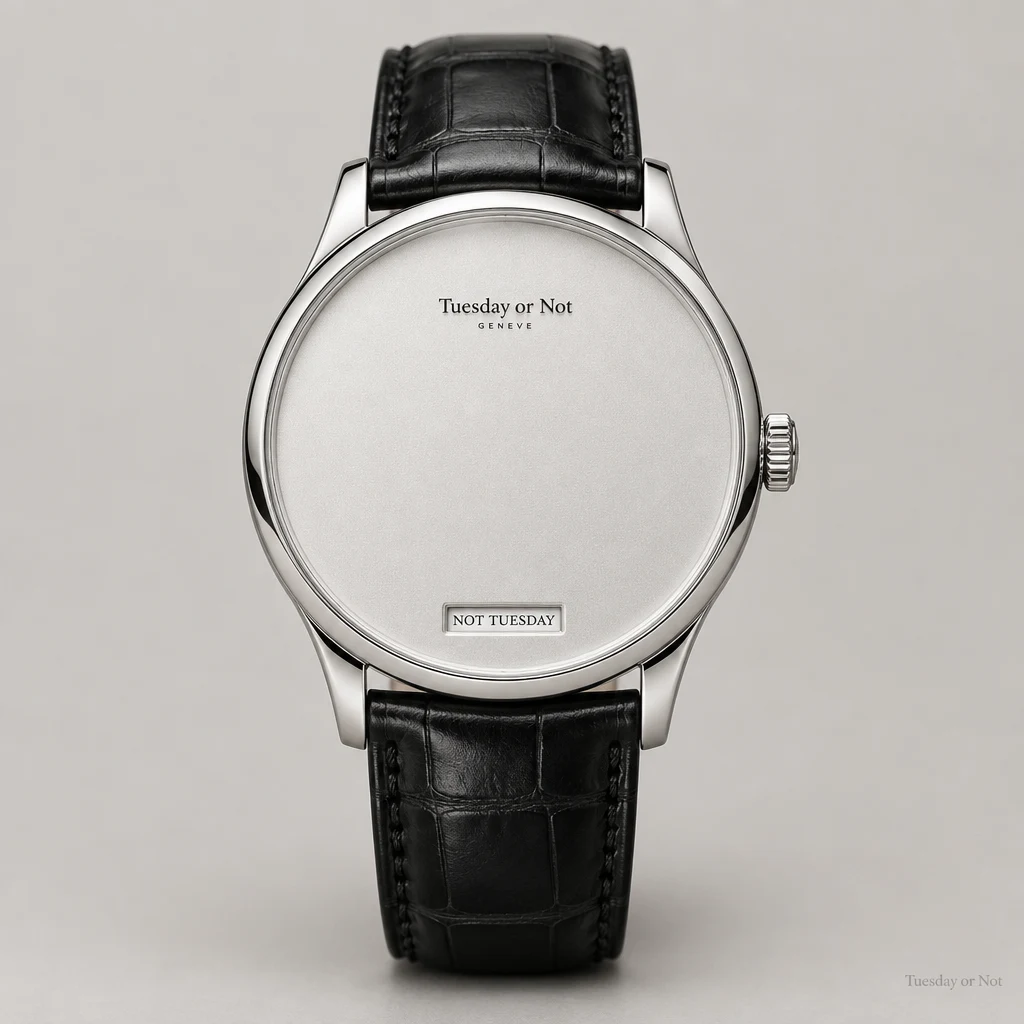
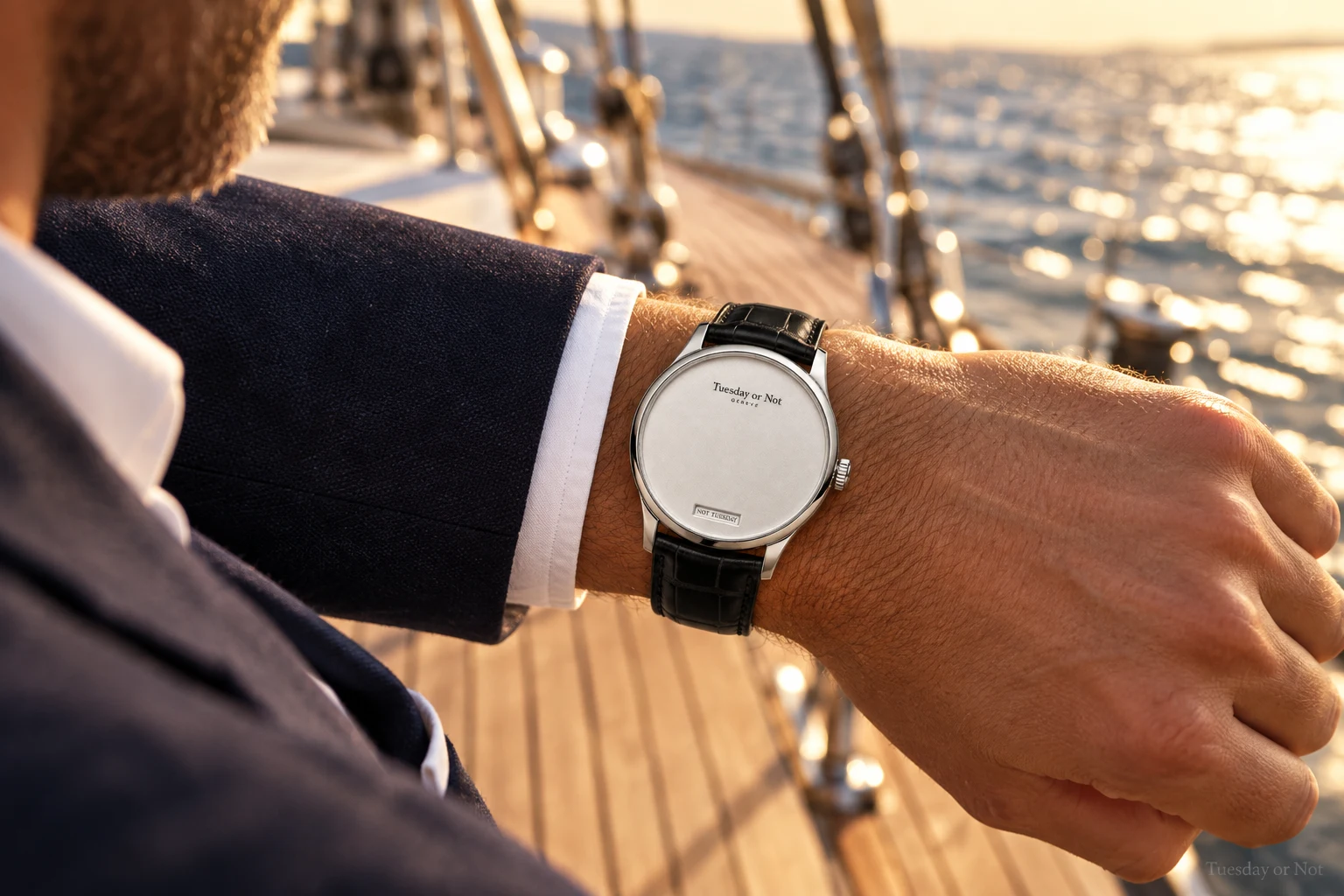
A hand-assembled Swiss mechanical watch with a single complication. It tells you whether it is Tuesday.
It does not tell the time. It does not show the date. Two hundred and twelve components, nineteen jewels and one hundred and forty years of Geneva watchmaking, devoted to one fact a week.
“A watch that tells the time tells you ten thousand things a day, most of them unwelcome. Ours tells you one thing a week, and it is never wrong.”
Aurèle Mardi, founder, 1886
I. The Complication
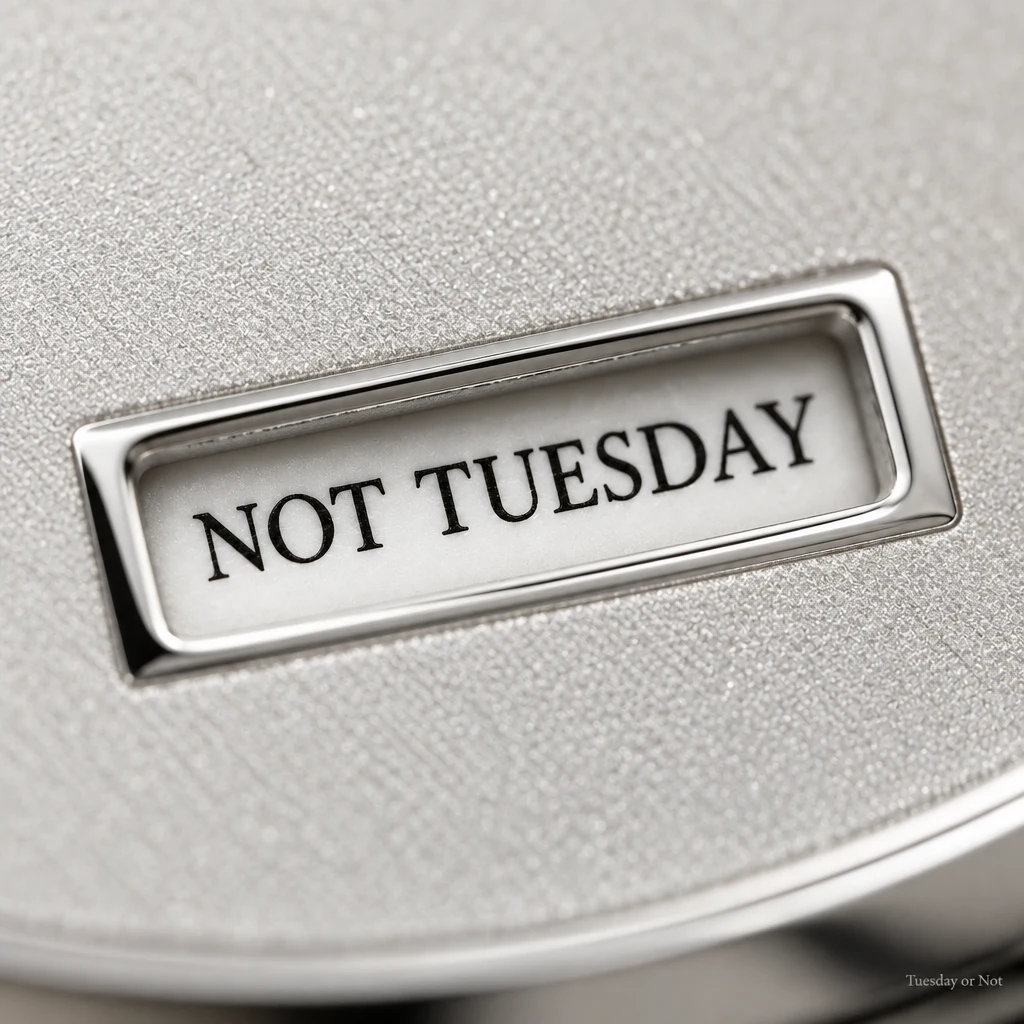
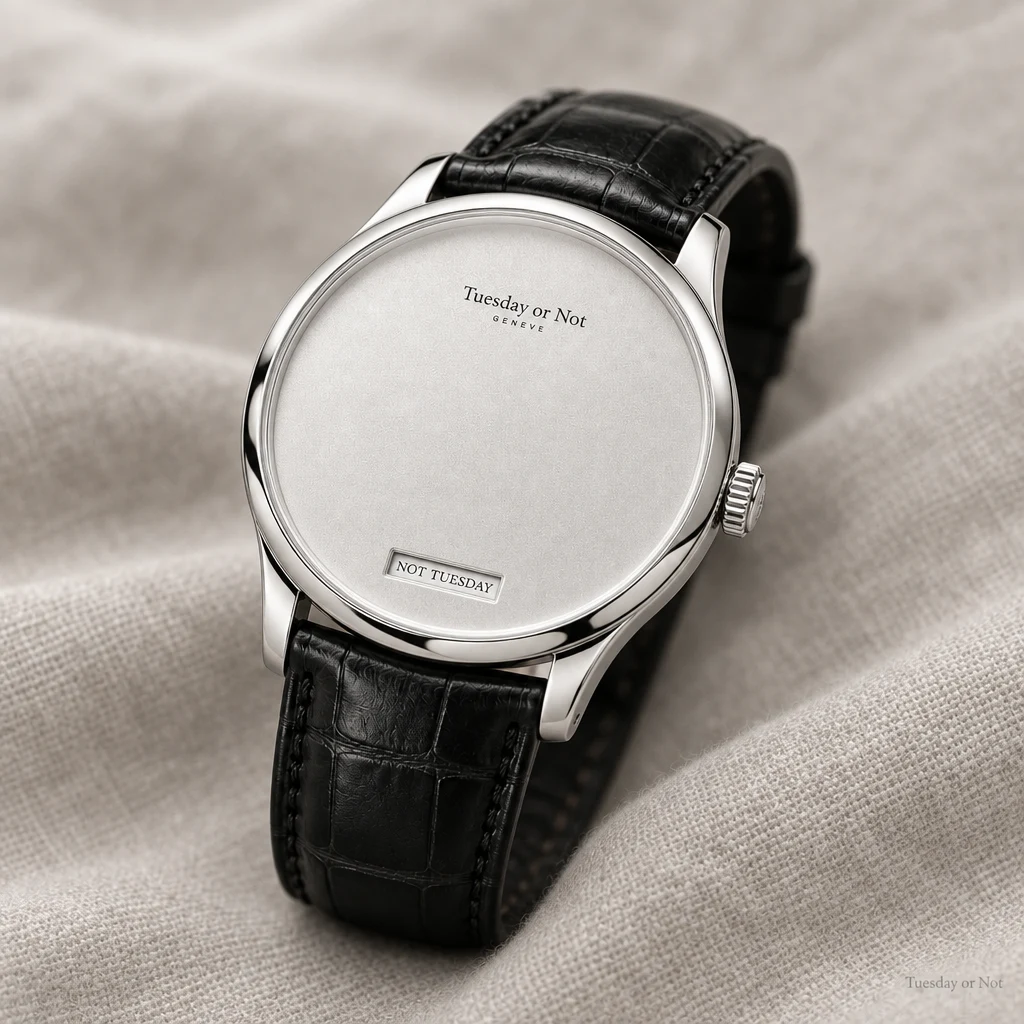
At the sixth hour of the dial sits a single aperture. Behind it turns a hand-lacquered enamel disc bearing, in alternation, the only two states the house recognises: Tuesday, and not.
The disc advances each midnight. Five of the seven advances change nothing visible, and the movement performs them with equal care. Owners tell us the Monday midnight turn rewards staying up.
There are no hands. Hands would imply the hours differ from one another, a position the house has never taken.
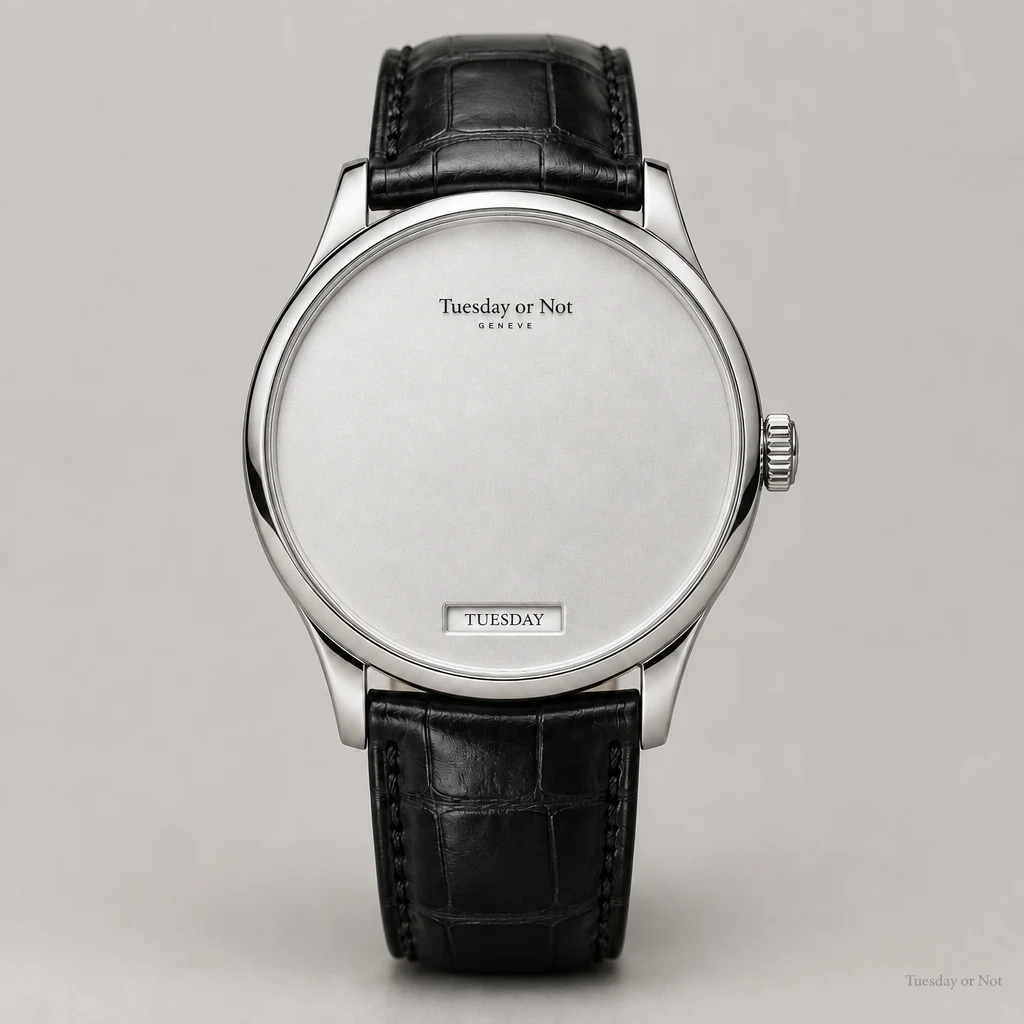
The Tuesday state
For roughly fourteen percent of its life, the Tuesday or Not displays its second word. Clients describe the effect variously as calm, vindication, or a reason to cancel the day's plans, since the watch has already accomplished enough for both of you.
The house does not photograph the Tuesday state on other days. The one above required a Tuesday, and got one.
II. The Movement
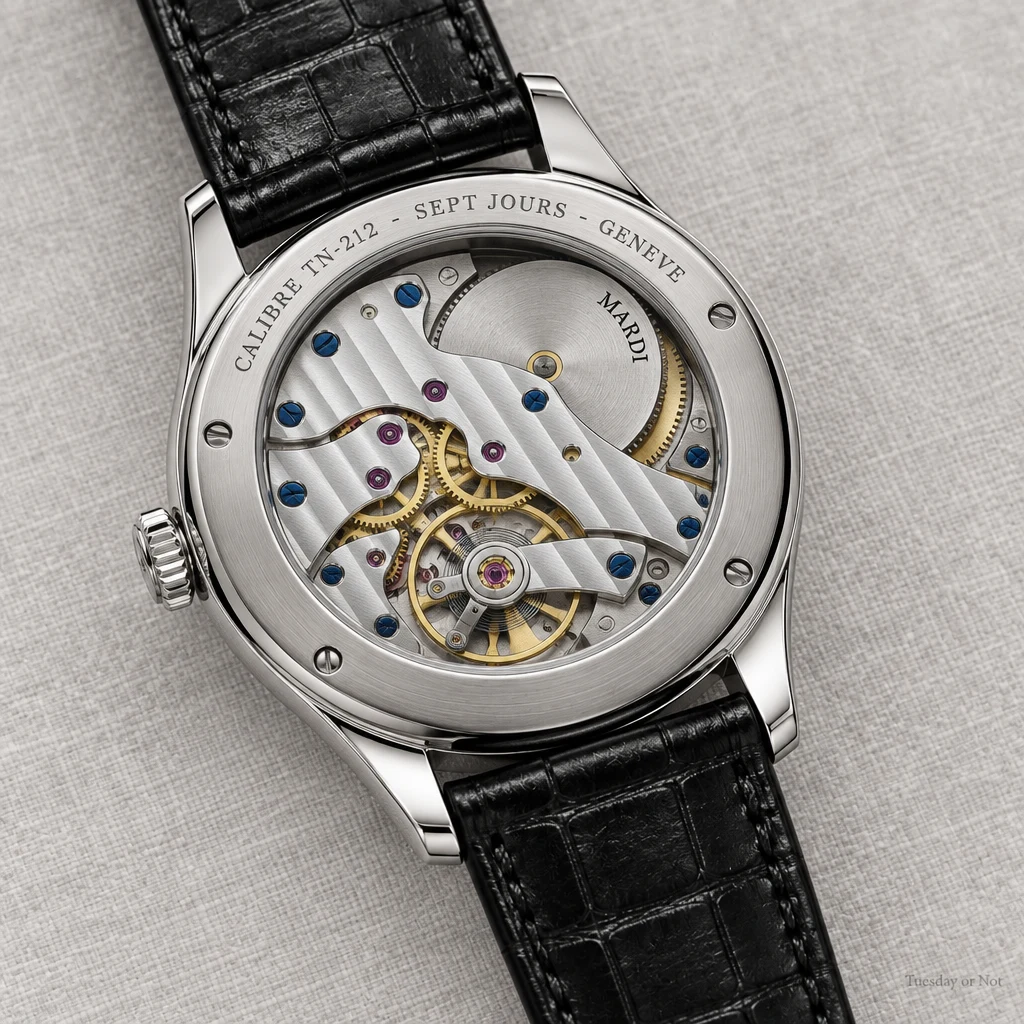
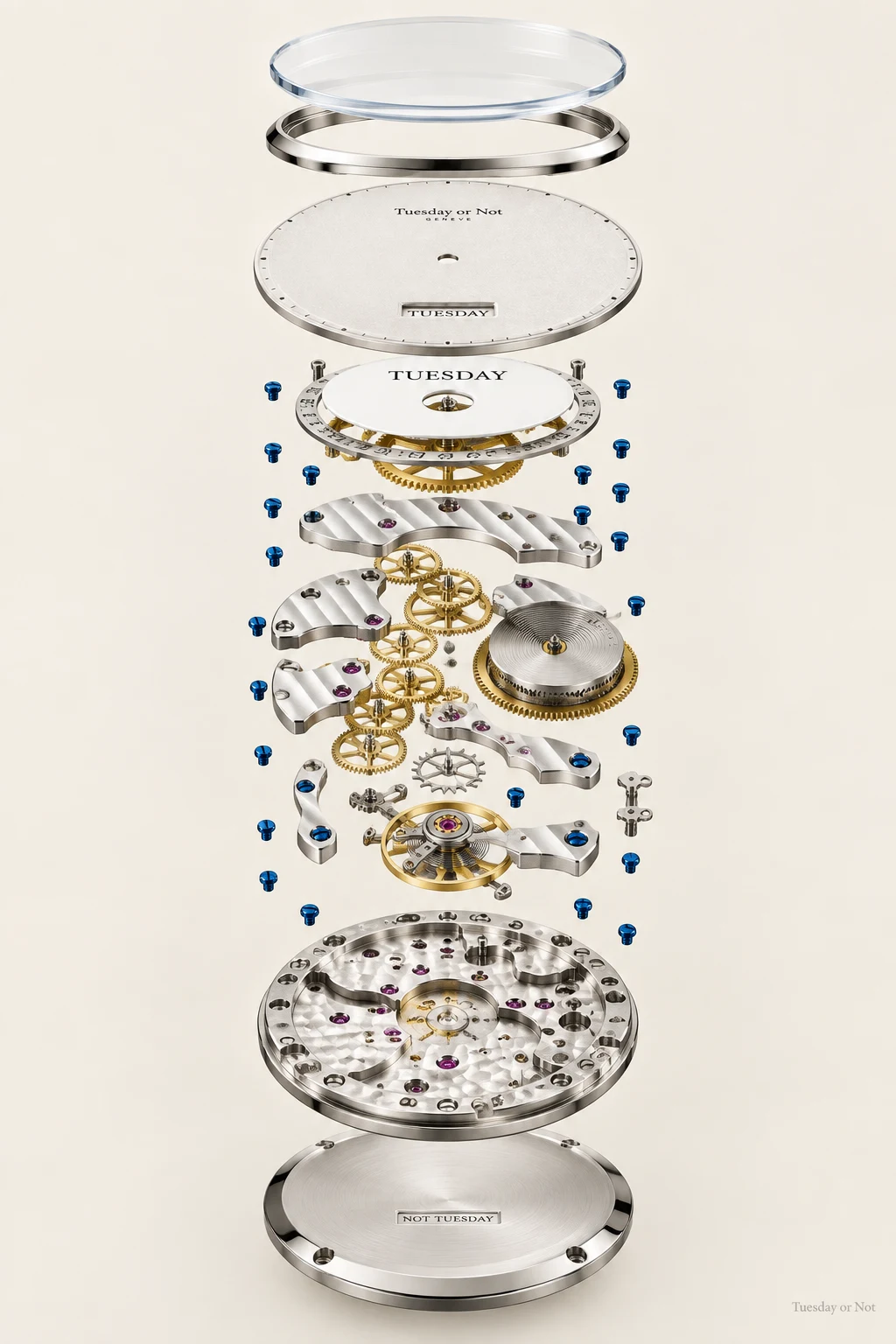
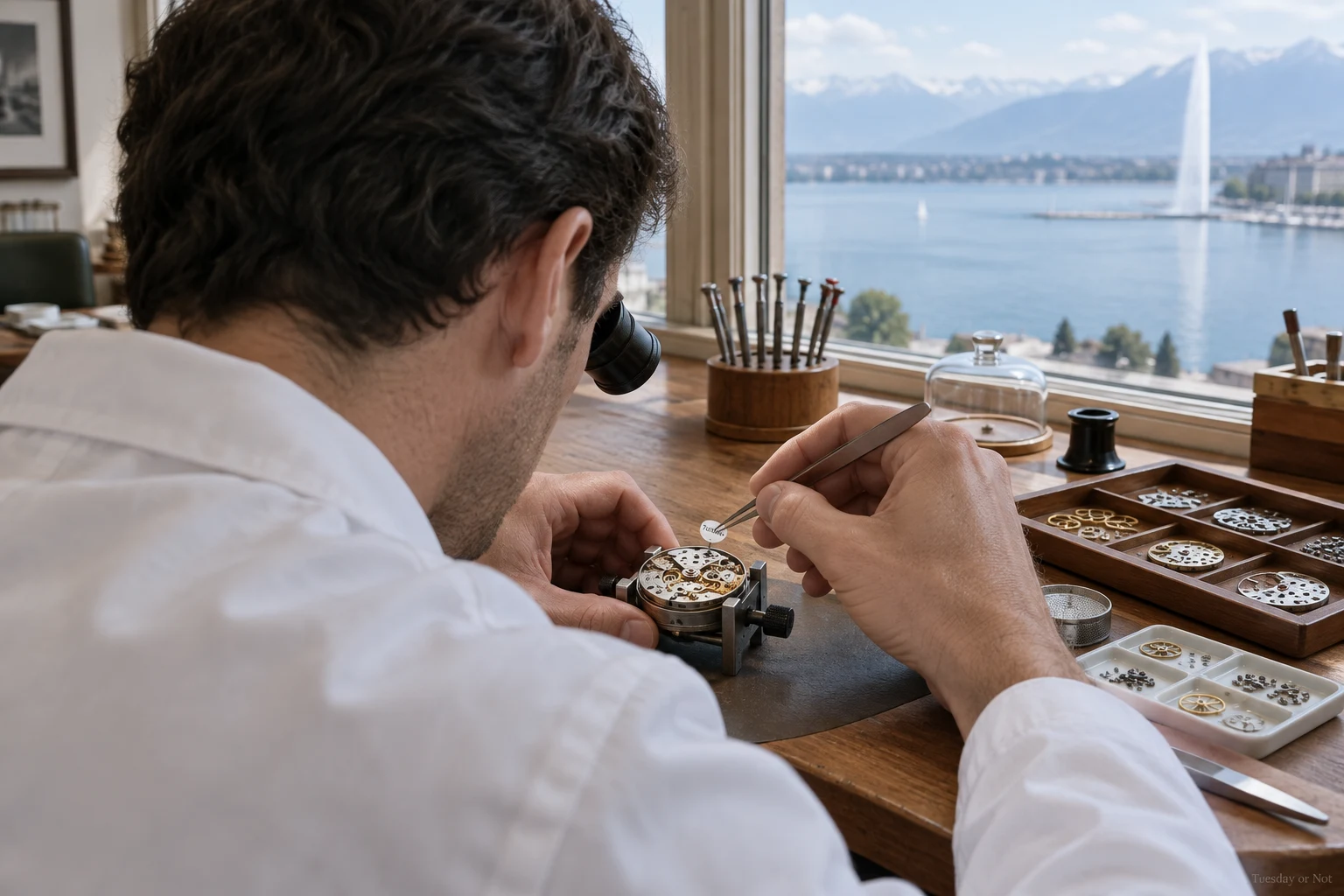
Two hundred and twelve components, assembled by one watchmaker over eleven days, none of them a Tuesday, by tradition. The calibre keeps time to chronometer standard. It simply declines to show it.
The mainspring holds seven days of power, one full week by design. Wound on a Wednesday morning, the watch carries you past the following Tuesday with a margin the house considers dignified.
Geneva stripes, blued screws, and a day wheel finished on both faces, including the five faces you will never see.
IV. Heritage
Aurèle Mardi opens a workshop above the Place du Molard, Geneva, resolving to build “an honest watch, stripped of everything negotiable.” The hours, he concluded, were negotiable.
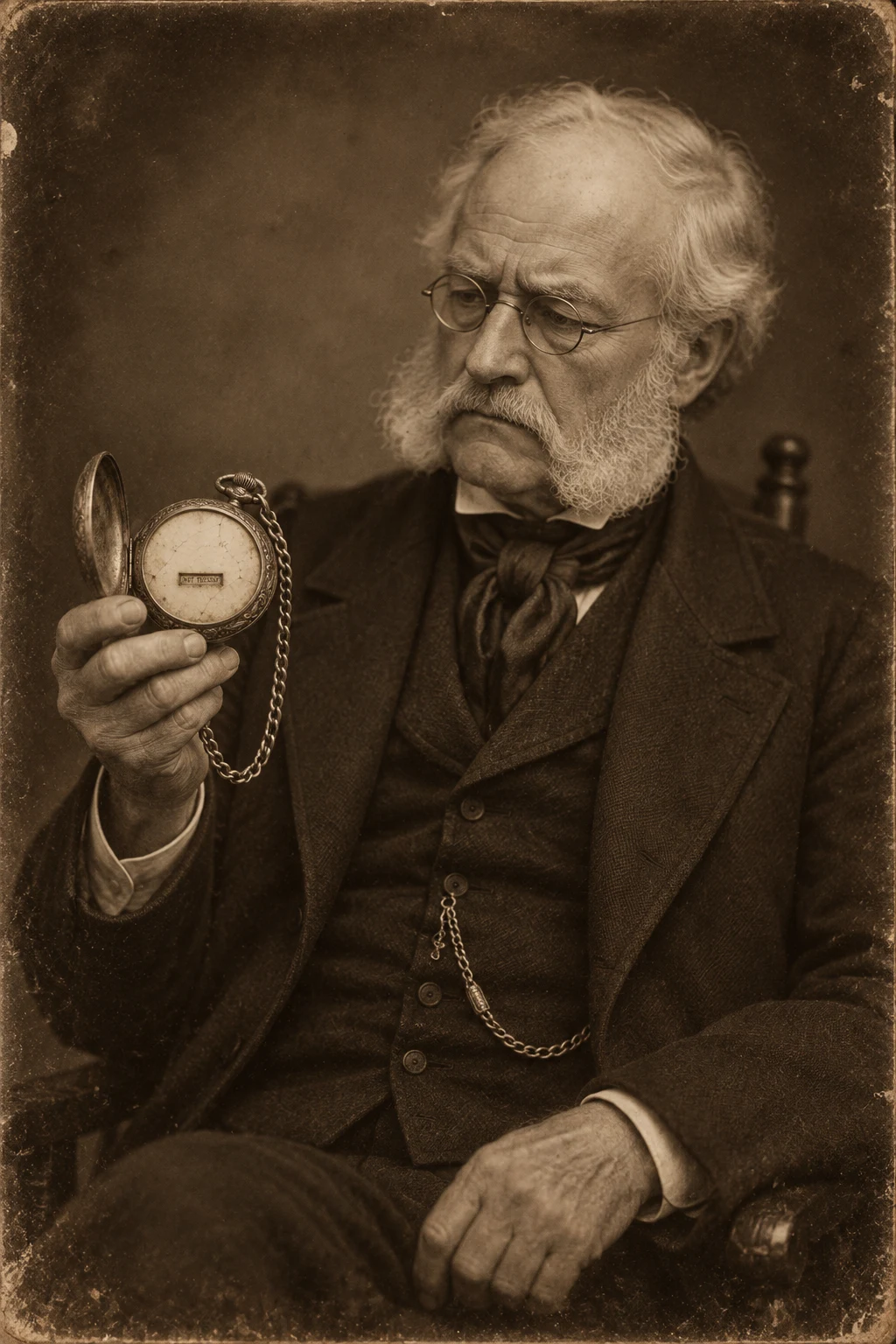
The first pocket watch leaves the bench. Mardi carries it for thirty-one years. It reads NOT TUESDAY for all of them.
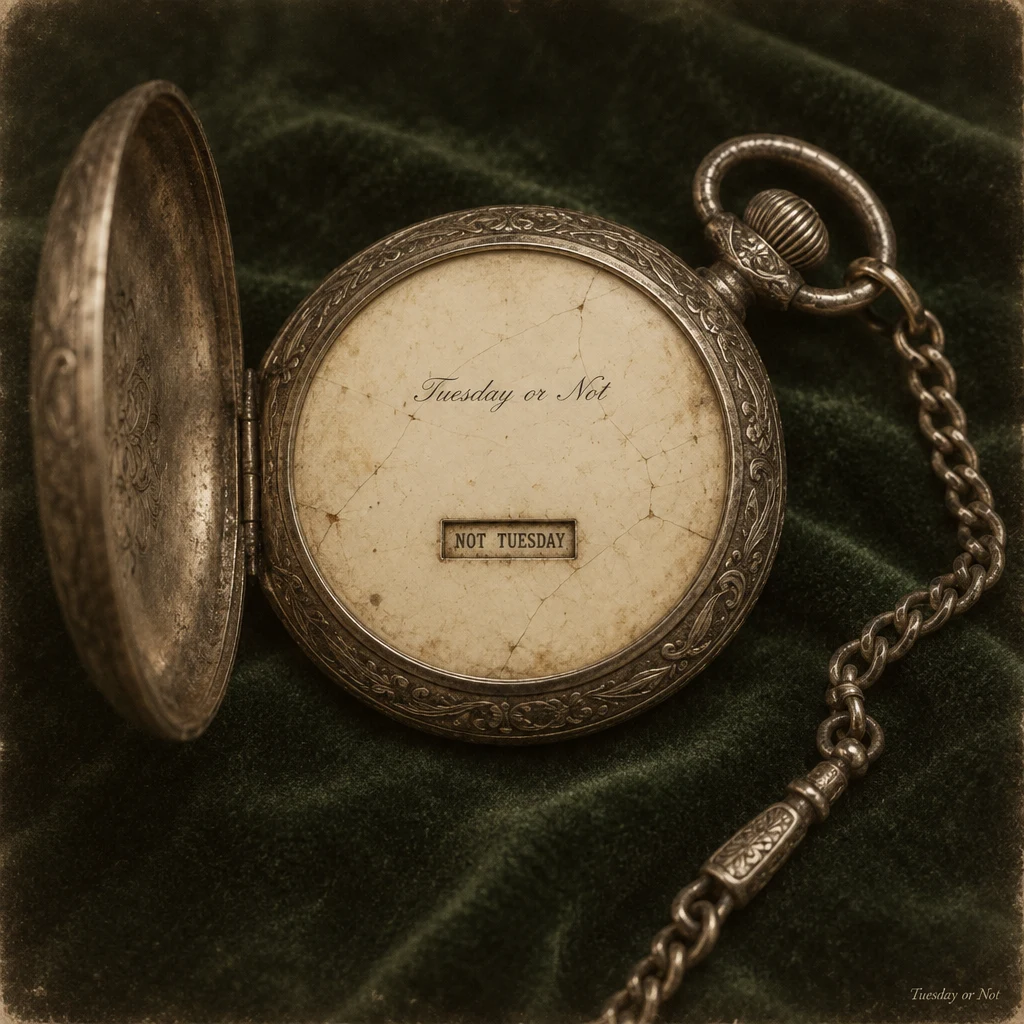
During a routine service, a technician discovers a seized pivot in the founder's personal watch. The day wheel had never advanced. The house issues its only recall, and its only apology.
The quartz crisis. A battery could now find Tuesday for eight francs. The house noted that a battery is wrong quietly, while a Mardi movement is right audibly, and carried on.
Introduction of the Almost Tuesday moonphase, after nineteen years of development, most of it spent on the question of when almost begins.
The current reference. Two hundred and twelve components. One window. No further comment.
V. The Collection
Each reference is built to order and delivered on a Tuesday, wherever possible. Pricing is available on request, and only on request.
VI. Specifications
VII. Acquisition
The house completes a small number of watches each year. Allocations are extended by correspondence. Kindly introduce yourself below.
Your request has been entered in the ledger. The allocations desk replies within four to six Tuesdays, and never on one, out of respect.
VIII. Questions
No. The Tuesday or Not tells you whether it is Tuesday. The time is widely available elsewhere and, in our experience, rarely good news.
The disc advances. On five nights of the week this changes NOT TUESDAY to NOT TUESDAY, and the movement executes the change flawlessly. The house considers unwitnessed perfection the highest form of finishing.
The watch shows Tuesday where the watch is. When crossing the date line westward, present the watch at any authorised boutique for realignment. Clients have attempted this themselves. We ask that they stop.
No client has reported an incorrect reading since 1958. The incident of 1958 is addressed in our heritage section, and nowhere else.
No. The house makes one complication. We are told Wednesday now has a lifestyle brand.
Every five years, or immediately if the watch disagrees with a calendar. To date, every such disagreement has been resolved in the watch's favour.