Restoration, plaques, and remembrance
Our volunteers are out on the street in all weather, clearing, measuring, watering, and, when it comes to that, sitting beside a pothole until the truck leaves.
Returning potholes to their original condition
Drag the handle to compare. Every restoration follows our standards: nothing is added to a pothole except water, and nothing is removed from it except what the wind blew in.
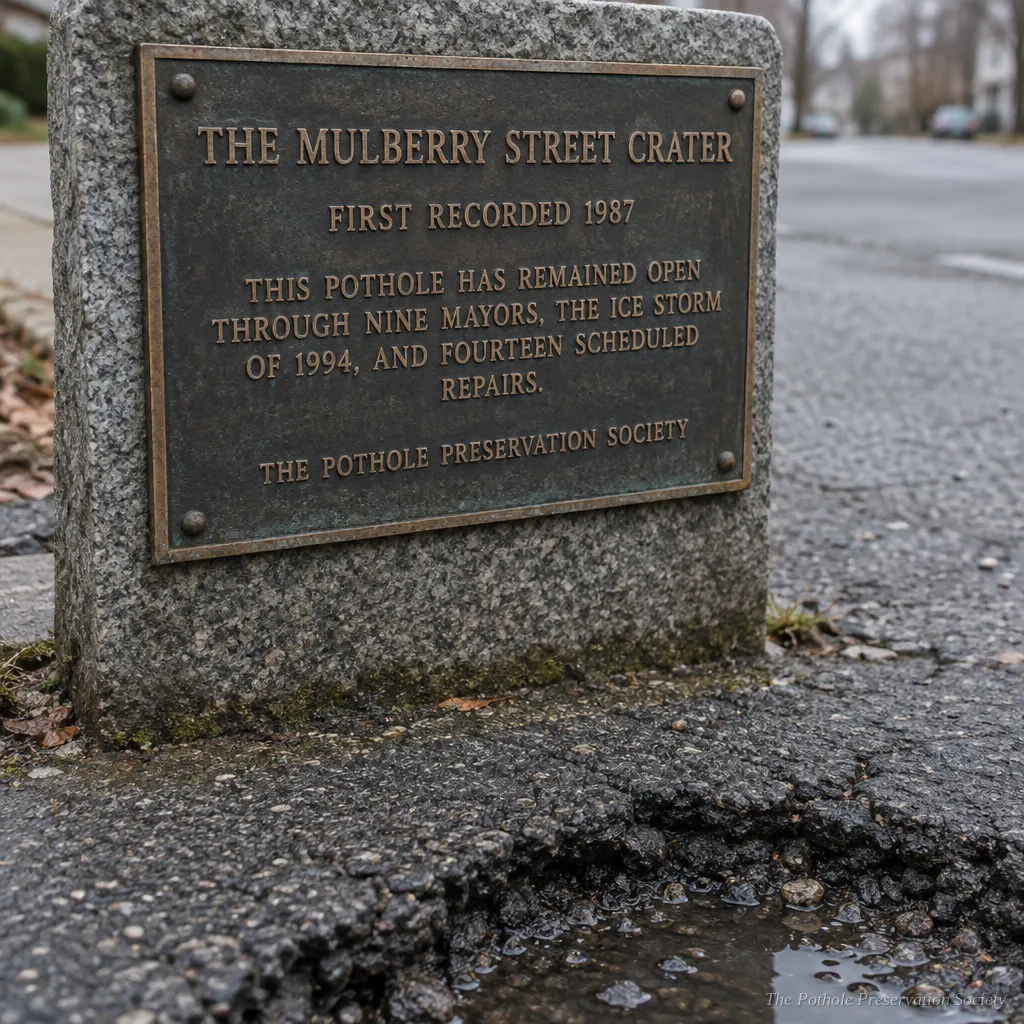
Bronze plaques
Each plaque is sand-cast in bronze by a foundry in Lancaster County, mounted on a granite post, and placed at the curb nearest the pothole. The text is researched and written by the Register Committee and reviewed by the pothole's adopter, if it has one.
Thirty-one plaques have been dedicated since 1992. Two have been removed by the borough and returned to us, and one was accidentally paved around, which we have chosen to see as a compliment.
A plaque sponsorship of $2,400 covers casting, the granite post, installation, and a dedication ceremony with a ribbon.
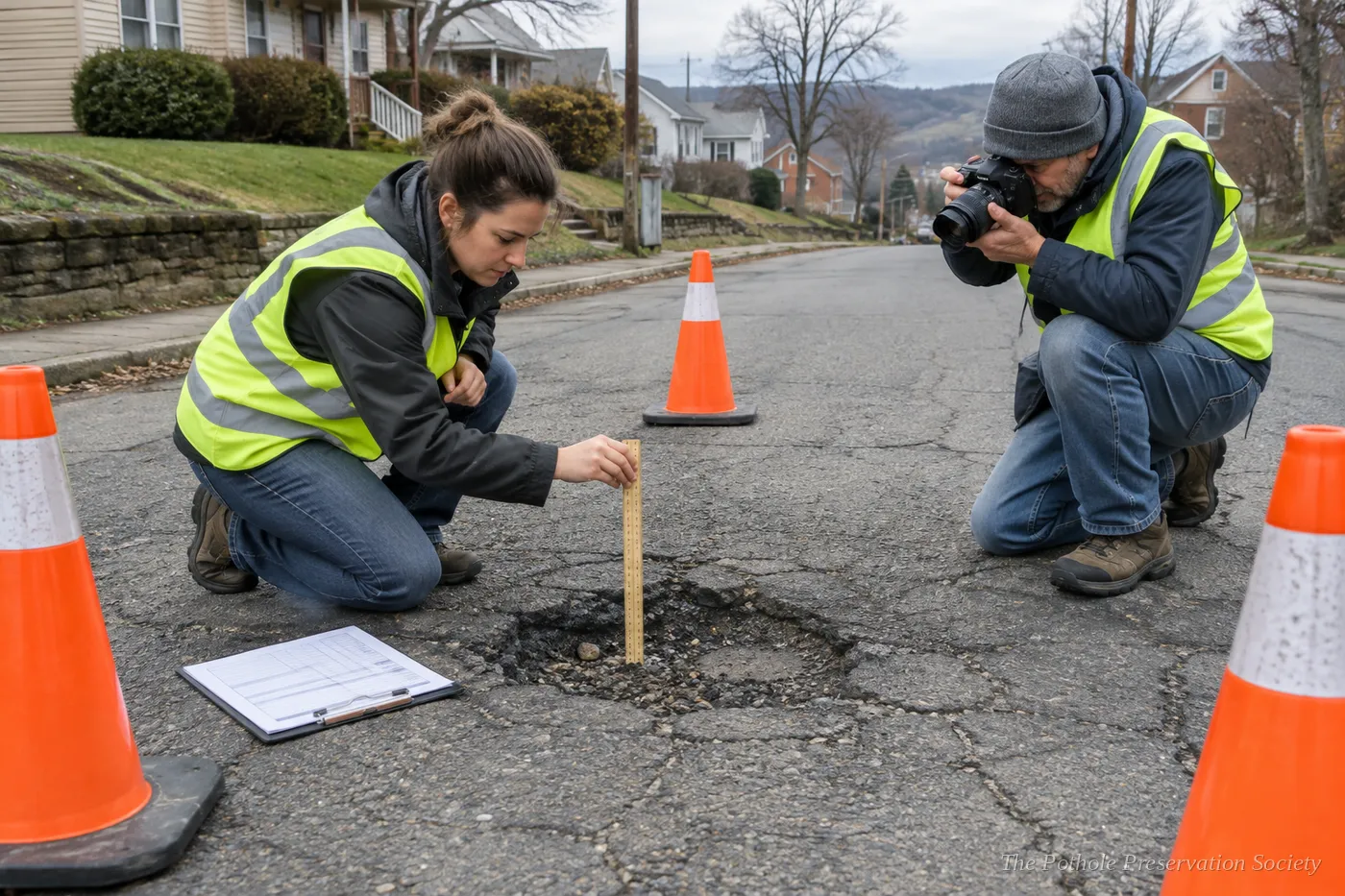
Every pothole, every quarter
Four times a year, volunteer teams visit every pothole on the Register. They record depth at the deepest point, measure length and width, note any loose aggregate, and photograph the pothole from the same position each time.
These surveys become the quarterly condition reports mailed to adopters. They also give us early warning. A fresh orange paint mark on the asphalt nearby usually means a crew is coming within two weeks.
The Commodore, 1988 to 2019
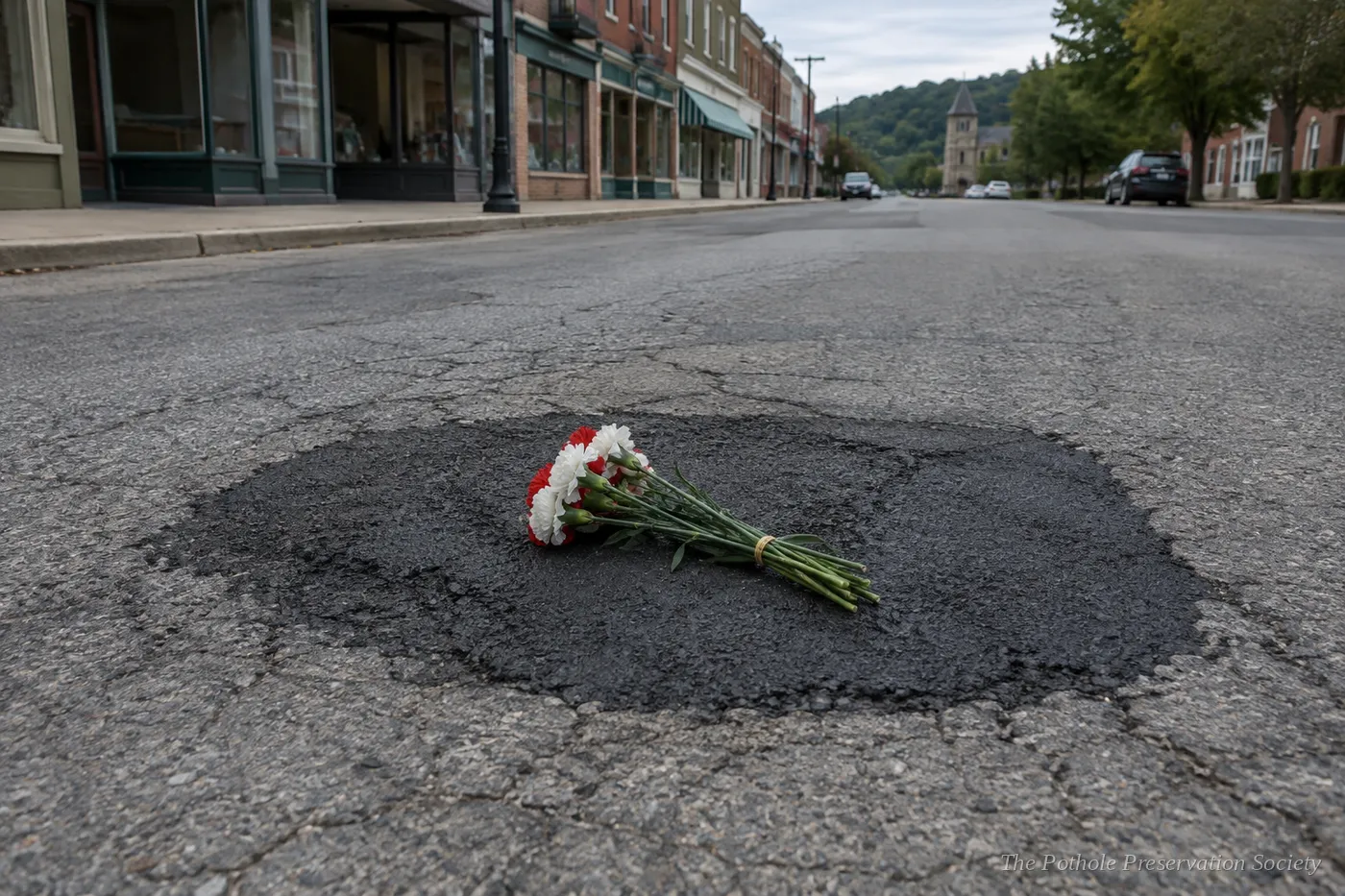
On the morning of April 9, 2019, a patching crew working ahead of schedule filled the Commodore with cold patch in under four minutes. It had been open for thirty-one years. Our volunteer was eleven minutes away, stopped at a red light.
We have lost 118 potholes since 1987. The Commodore is the one we talk about. The Legal Defense Fund was established that afternoon so that it would not happen the same way again.